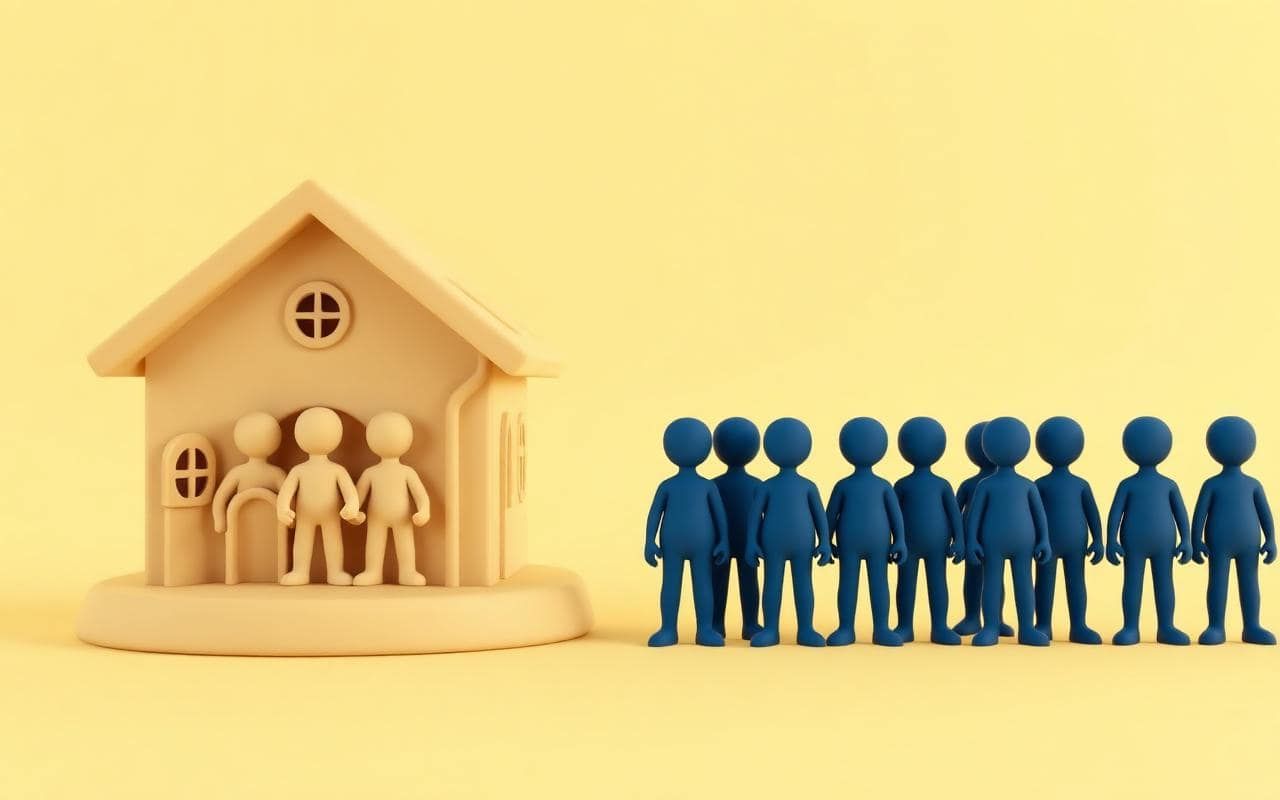
Why Your Shopify + Klaviyo Stack Has a Blind Spot
Shopify gives you transaction data. Klaviyo gives you behaviour. Neither tells you who your customer actually is. And that's the variable doing most of the work.

The default D2C stack is more limited than it looks
Shopify plus Klaviyo is the closest thing to a universal D2C marketing stack. It runs the storefront, captures the orders, owns the email programme, drives a chunk of revenue, and integrates with everything else.
It also has a blind spot. And it's the variable doing most of the work in your funnel.
What Shopify actually knows
- Order history, AOV, units, product mix
- Shipping address (post-purchase only)
- Whether someone accepted marketing
- A handful of self-reported fields (date of birth, sometimes occupation)
That's it. Shopify is excellent at the transaction. It is not, and was never designed to be, a customer intelligence platform.
What Klaviyo actually knows
- Email and SMS engagement (opens, clicks, send history)
- Onsite behaviour via the Klaviyo pixel (browse, add-to-cart, purchase events)
- Predictive attributes built from the above (CLV, churn risk, expected next order)
- Whatever profile properties Shopify and your forms feed it
Klaviyo is excellent at the behavioural layer. It does not, and cannot, tell you whether someone is a homeowner, a recent mover, in a £750k house or a one-bed rental.
The blind spot, named
Between the two platforms you can answer almost every what question. What they bought, what they opened, what they're likely to do next. You can answer almost no who questions:
- Are they an owner-occupier or a renter?
- Detached house or one-bed flat?
- Bigger family or empty nest?
- Just moved, settled, or about to move?
- High Purchasing Power household, or stretched?
Every one of those is more predictive of the next-best offer than another behavioural trigger. The stack just doesn't see it.
Why this is hurting your numbers without you noticing
Your "best" segments are still guessing
Segments built on order count and predicted CLV are useful. But they describe what someone has done with you, not who they are. Two profiles with the same order history can have wildly different propensity to spend more, depending on household context Klaviyo can't see.
Your flows treat very different households the same way
The default welcome series, the default win-back, the default replenishment. They all run identical copy and offer logic against profiles whose lives look nothing alike. That's not personalisation; it's branching by behaviour and hoping.
Your paid social is built on the same blind spot
When you sync a Klaviyo segment to Meta as a Custom Audience seed, the seed inherits the blind spot. Meta's algorithm prospects from a generic shape, so its lookalikes are generic too. (More on that in household audiences vs lookalike audiences: a head-to-head.)
How to fix the blind spot without rebuilding the stack
The fix isn't another platform. It's an enrichment layer that writes household attributes into the Klaviyo profile you already have:
- Connect Klaviyo to Outra (OAuth, ~10 minutes. See the 10-minute setup guide)
- Outra resolves each profile to a UK household identifier
- Family stage, Occupancy status, Property type, Bedrooms, Property value band, Purchasing power band and Move stage are written back as standard custom properties
- Every existing segment, flow and Custom Audience can immediately reference them
Shopify keeps doing what it does well. Klaviyo keeps doing what it does well. The blind spot just disappears.
The bottom line
Shopify + Klaviyo is the right stack. It's missing a layer. The household context that explains why people behave the way they do. Add it, and the segments, flows and Custom Audiences you already run start working on the right people instead of the average people.
Add the household layer your D2C stack is missing
Shopify holds the transaction. Klaviyo holds the behaviour. Outra adds the household, Family stage, Property type, Purchasing power band, Move stage, written back to every Klaviyo profile so your stack finally sees who your customer actually is.
What Outra knows about every UK household
All attributes and segments are tied to a single identifier: the household, not an email, not a cookie.
- Employment stage
- Move stage
- Age band
- Family stage
- Occupancy status
- Property type
- Bedrooms
- Property size
- Property value band (£)
- Garden
- Garage
- Parking / Driveway
- Area type
- Region
- Purchasing power band
- Household income band
- Credit score band
- UHW (ultra-high wealth)