The Household Audiences Guide: Building Prospecting That Beats Lookalikes
A pillar guide to household audiences for UK D2C brands. What they are, how they beat lookalikes, how to build and activate one, and how to measure the lift.

Why this guide exists
Most D2C prospecting in 2026 still leans on Meta lookalikes built from a Shopify customer export. The shape worked when third-party signal was abundant. It works less well every quarter. Lookalikes are opaque, increasingly generic, and shared in spirit by every brand uploading a similar seed.
Household audiences are the alternative. And they are the most useful single lever a UK D2C brand has left on Meta, Google and programmatic. This guide is the pillar that anchors the rest of our writing on the topic. Each section links out to a deeper piece if you want to go further.
What is a household audience?
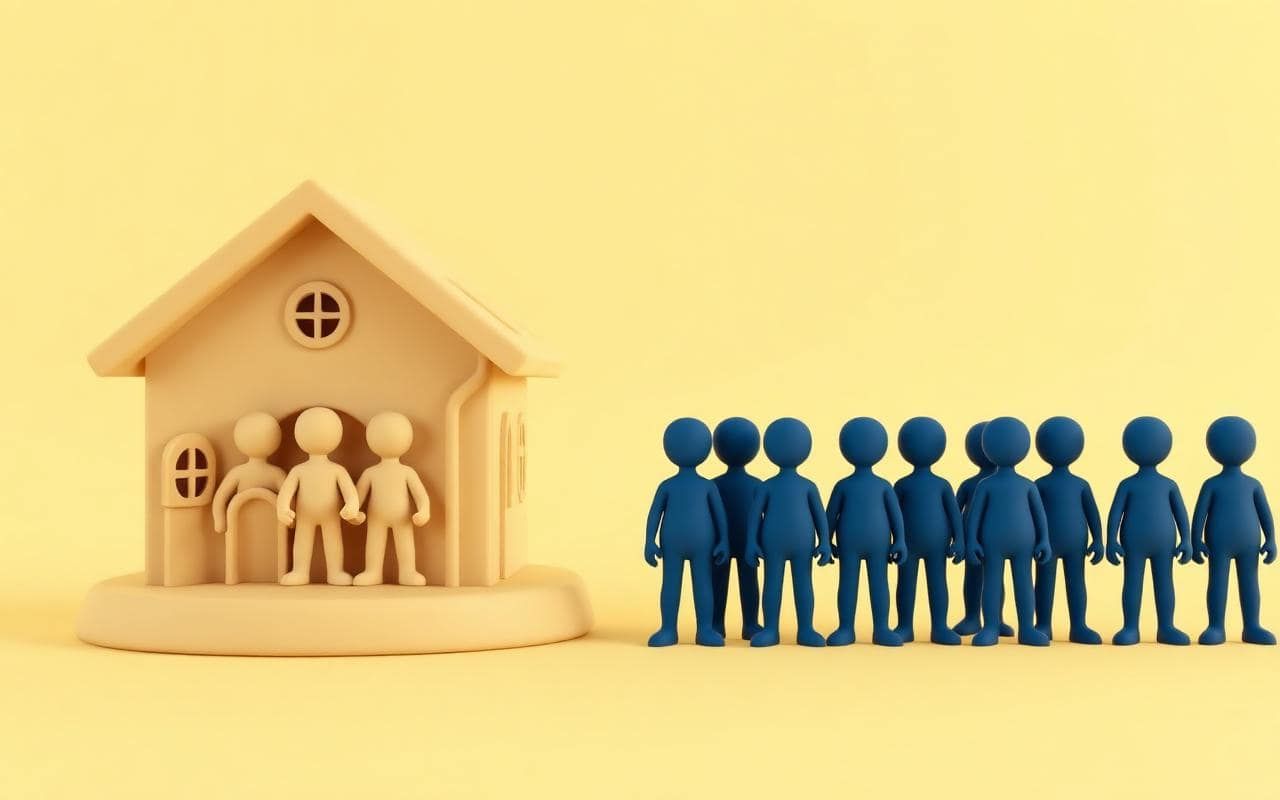
A household audience is a deterministic list of UK addresses that match named criteria you control. For example: homeowners in £75k+ households who moved in the last 12 months. The audience is built from a brief, not from a customer list. You can see exactly who is in it, suppress members, and explain your targeting to anyone in the business.
Compare that to a Meta lookalike. A lookalike is the platform's algorithm guessing who looks similar to your seed, based on signals only the platform sees. You can't read the audience, you can't suppress it, and the same lookalike shape is being built by every brand using a similar seed. (For the longer breakdown, see household audiences vs lookalike audiences: a head-to-head.)
The shorthand: a lookalike scales a guess; a household audience scales a decision.
The four attributes that drive audience quality
Most of the lift comes from four families of household signal:
- Property. Tenure (owner-occupier vs renter), property type, bedrooms, property value band.
- Life stage. Family stage (single, couple, young family, established family, later life), age band, employment stage.
- Purchasing power. Purchasing power band, household income band, credit score band.
- Move stage. Predicted mover, move intent, currently moving, just moved, recently moved. Movers are the highest-intent audience in most home-anchored categories.
Pick the two that most predict purchase in your category, not all four. A furniture brand cares about move stage and property type. A wealth-management brand cares about purchasing power and life stage. A kitchen brand wants owner-occupiers in matched property value bands with a renovation overlay.
Building your first household audience in four steps
1. Define the decision, not the demographic
"Women 25–44 in London" is a demographic. "Owner-occupiers in £400k+ properties who moved in the last 6 months" is a decision. Write down the decision your best buyers made, then translate it to household attributes.
2. Brief the audience
Combine 2–3 attributes into a brief. Keep it tight enough that you can name what you're targeting in one sentence. The audience size will be smaller than a broad lookalike, that's the point.
3. Suppress what you already have
Add existing customers and recent subscribers as exclusions. Without that step you're paying prospecting CPMs to reach people already in your CRM. (See Klaviyo flows that depend on household data for the suppression segments that matter most.)
4. Activate where you already spend
Push the audience to Meta, Google or your DSP as a Custom Audience / Customer Match list. Your creative, bidding and reporting stay where they are. (Full walkthrough: activating household audiences in Meta, Google and programmatic.)
Activating across Meta, Google and programmatic
The same household audience lights up three places:
- Meta. Pushed as a Custom Audience. Targetable, suppressible, and a stronger seed for Advantage+ than a raw email list. This is where most of the detailed-targeting loss can be recovered.
- Google. Pushed as Customer Match. Useful for Search RLSAs, YouTube and PMax negative-audiences as much as for positive targeting.
- Programmatic / DSPs. Accepted as hashed identifier lists or onboarded segments. Same audience, different channel.
For the upstream signal piece, how anonymous behaviour resolves to a real household, see linking online behaviour to households.
Suppression and frequency capping
Suppression is the unglamorous half of every good audience. A household audience suppresses cleanly because the unit is the household. Two devices in the same home stop counting as two people, and frequency caps work the way they were always supposed to. The two suppressions that move the most money:
- Existing customers + active subscribers. Prospecting should never spend against people already in your flows.
- Unsuitable households. Wrong tenure, wrong property type, wrong purchasing power band for your AOV. Removing them before the impression is bought is cheaper than discounting it afterwards.
Measuring the lift cleanly
The standard for measuring household-audience lift is a matched-control holdout, held constant on creative and bidding, run for at least one full purchase cycle for the category. CPA and AOV are the headline numbers; incrementality is the one that decides whether you scale.
Categories anchored to property, life stage, or move event show the cleanest lift. Impulse categories show less. (Deeper read: where household-level targeting actually lifts conversion.)
When household audiences don't help
Two scenarios where the answer is honestly "stick with what you have":
- Pure-impulse, low-AOV categories where audience choice barely matters and creative does almost all the work.
- Sub-£20k monthly budgets where you're not yet hitting prospecting frequency caps. Sharper targeting helps once you're paying for the wrong impressions. Before that, creative and offer come first.
Getting started checklist
- Pick one campaign you can test against, your best-performing prospecting ad set.
- Write a one-sentence audience brief in plain English.
- List the suppressions (customers, subscribers, unsuitable households).
- Pick the channel where you have the most reliable measurement, usually Meta.
- Run a matched holdout for one full purchase cycle.
- Read the lift number, not the CPA on day three.
Read next
Each of these goes deeper on one section of this guide:
- Household audiences vs lookalike audiences: a head-to-head
- Household targeting vs lookalikes: the strategic case
- Where household-level targeting actually lifts conversion
- Activating household audiences in Meta, Google and programmatic
- Linking anonymous online behaviour to real households
- Recent movers: the highest-intent audience you're not targeting
- Beyond lookalike audiences. The shorter intro that started this series.
Build transparent prospect audiences, not black-box lookalikes
Pick from ready-made segments, Just moved, Established Professionals, High Purchasing Power, Bigger Families, and push them straight to Meta, Google or TikTok.
What Outra knows about every UK household
All attributes and segments are tied to a single identifier: the household, not an email, not a cookie.
- Employment stage
- Move stage
- Age band
- Family stage
- Occupancy status
- Property type
- Bedrooms
- Property size
- Property value band (£)
- Garden
- Garage
- Parking / Driveway
- Area type
- Region
- Purchasing power band
- Household income band
- Credit score band
- UHW (ultra-high wealth)